
Ya'll Got Grubs… and it shows
Why every lawn in South Minneapolis seems to be getting dug up right now
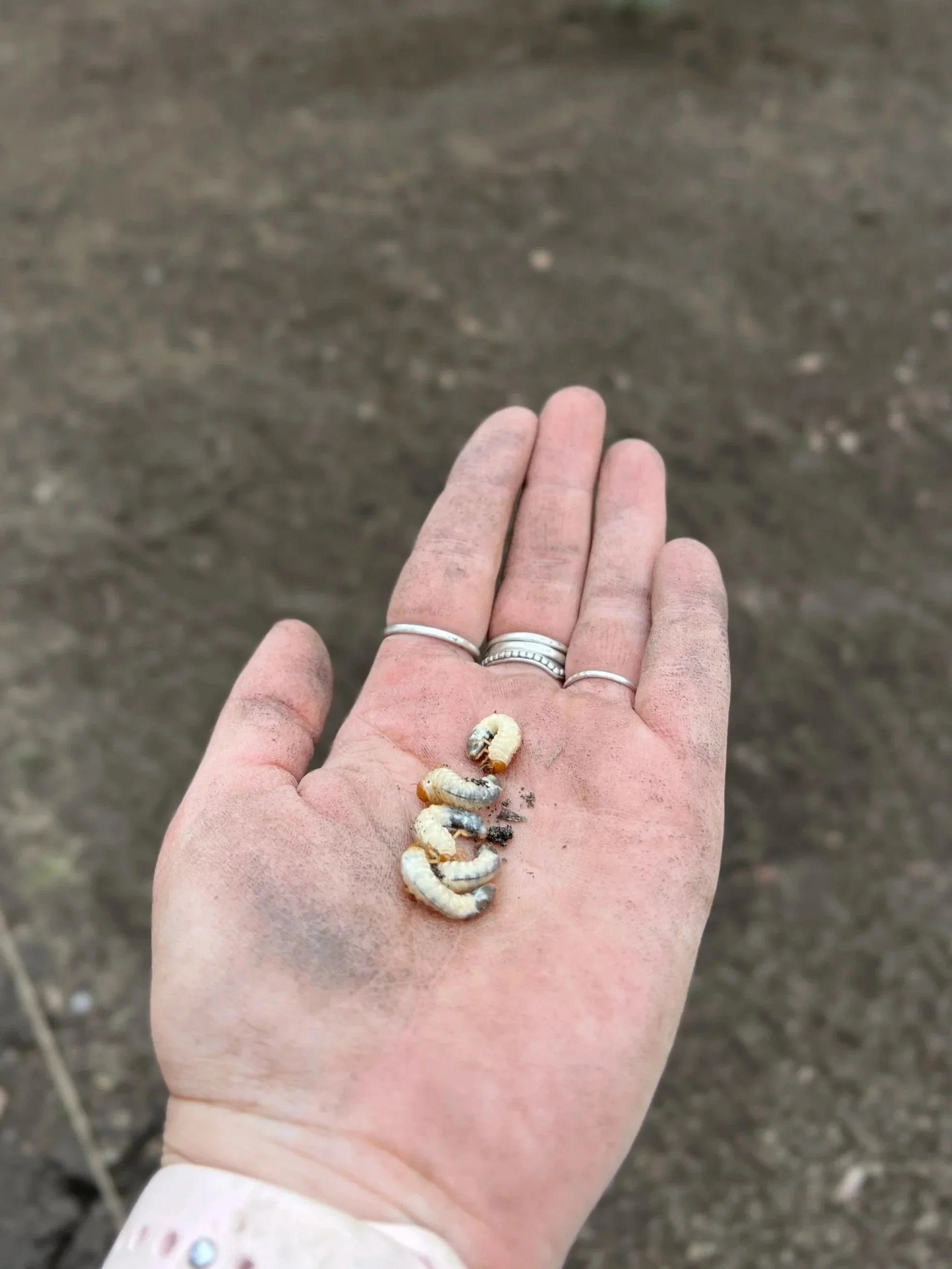
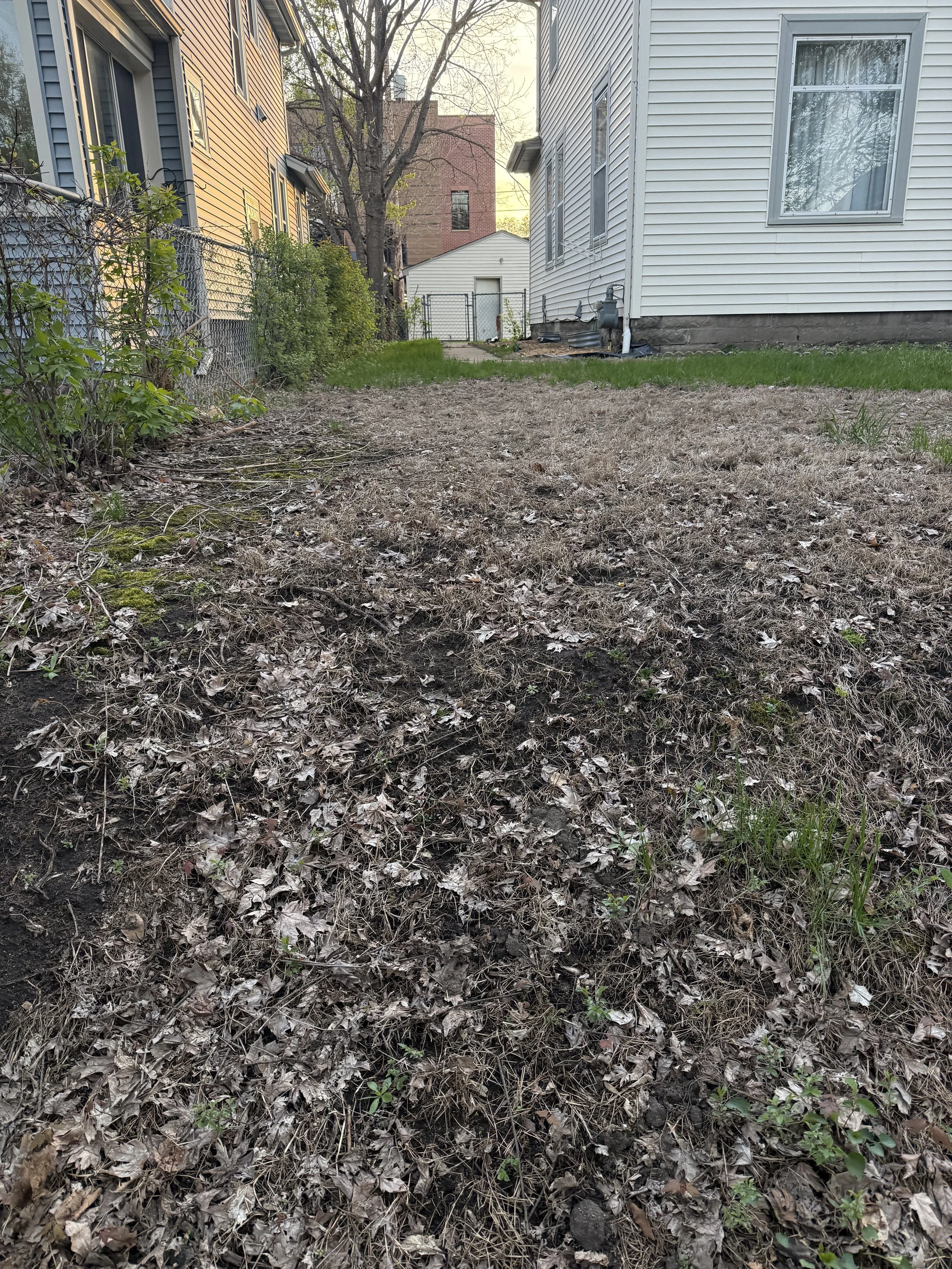
Lately, it feels like every other yard I look at in South Minneapolis has grub damage.
I find myself driving around town saying, "Grubs. Grubs. Grubs." Nate is sick of hearing it by now.
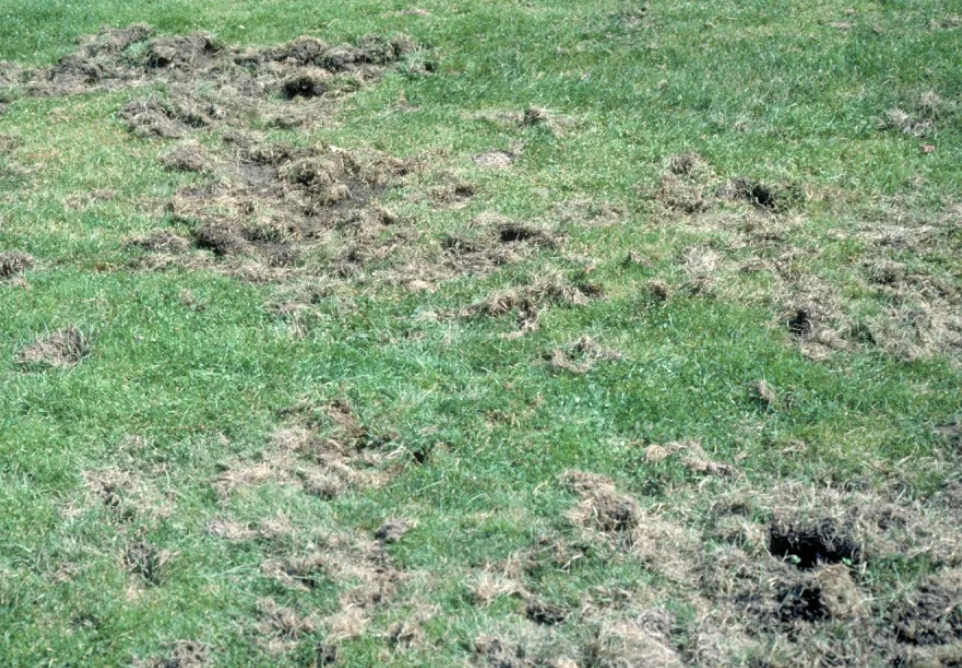
If you've noticed dead patches of grass, turf peeling back like carpet, or raccoons, skunks, crows, and other critters tearing up your yard, there's a good chance you're dealing with white grubs.
The animals aren't actually the problem. They're just showing up for the buffet.
What Are White Grubs?
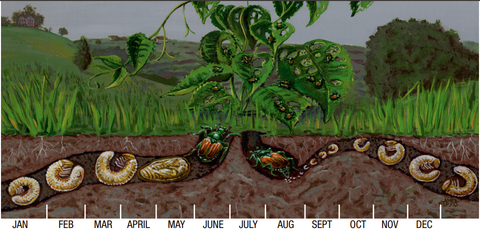
White grubs are the larvae of several beetle species, including Japanese beetles, May and June beetles, and masked chafers. They live below the soil surface and feed on grass roots.
A few grubs are normal and generally not a problem. A healthy lawn can tolerate some feeding without showing signs of damage.
The trouble starts when grub populations get high and the lawn is already stressed.
Why Are We Seeing So Much Damage?
Grubs have been around for years. This isn't a new problem.
What we've seen in recent years is a combination of grub pressure and drought stress.
Traditional Kentucky bluegrass lawns tend to have relatively shallow root systems. During hot, dry periods, those roots are already struggling to find water. Add a bunch of hungry grubs feeding on those roots, and the lawn doesn't stand much of a chance.
Then the raccoons, skunks, crows, and other wildlife show up looking for an easy meal and cause even more damage.
Many homeowners assume the animals are causing the problem. In reality, they're often just helping you discover it.
The Grub Check
Before you panic and buy every grub product at the garden center, take a look.
Grab a shovel and cut out roughly a one square foot section of turf.
If the grass pulls up easily and you find white C-shaped grubs underneath, you may have a grub issue.
A few grubs are normal.
University research suggests treatment is generally only warranted when you have visible damage and roughly 10 or more grubs per square foot.
Finding a couple grubs doesn't mean you need to declare war on your lawn.
What Does Grub Damage Look Like?
Common signs include:
Irregular patches of dead or thinning grass
Areas that look drought stressed even when you've been watering
Turf that lifts up easily because roots have been eaten
Raccoons, skunks, crows, or other wildlife digging up sections of lawn
Damage that seems to get worse during hot, dry weather
Many people first notice the symptoms long before they realize grubs are involved.
Should You Treat Right Now?
Not necessarily.
One of the biggest misconceptions is that seeing grub damage means you need to immediately apply a treatment.
Timing matters.
White grubs are active from late spring through summer, but different beetle species have slightly different life cycles. In many cases, the best treatment window is before severe damage occurs or when young grubs are present.
For homeowners dealing with recurring grub issues, planning ahead is often more effective than reacting after the damage is already done.
What We Use
At Blissful Bee Gardening, we don't typically offer grub treatments as a standalone service.
Most often, we're addressing grubs when we're renovating a lawn, establishing a bee lawn, or converting a traditional lawn into a lower maintenance eco lawn.
When treatment is warranted, we typically use GrubGone, an OMRI-listed biological product that uses a naturally occurring soil bacterium to control several common grub species.
One of the reasons we like it is that it can be used as part of a more ecological approach. It targets grubs without many of the concerns associated with broader-spectrum insecticides and has no label restrictions around bees or flowering plants.
As always, the right treatment depends on timing, severity, and your goals for the space.
Maybe This Is a Sign
One thing we've noticed is that lawns struggling with recurring grub damage are often struggling with other things too.
Drought stress. Compacted soil. Heavy watering requirements. Poor root systems.
Sometimes grub damage becomes an opportunity to rethink what you want from your yard.
We're big advocates for bee lawns and fine fescue based eco lawns because they generally require less water, less fertilizer, and can be more resilient than traditional turf lawns.
Or maybe switch your lawn to a pollinator garden.
We'll save the deep dive on bee lawns for another blog post, but if you've been fighting the same lawn problems year after year, it may be worth considering a different approach.
Looking Ahead
If you're seeing grub damage now, the most important thing is figuring out what you're dealing with before spending money on treatments.
Check your lawn. Count the grubs. Pay attention to timing.
And remember that a few grubs are normal.
The best time to establish a bee lawn or renovate a struggling lawn is typically early spring or fall. We're currently booking projects into the fall, so if you're thinking about transitioning to a bee lawn, eco lawn, or simply want help figuring out what's happening in your yard, now is a great time to start the conversation.
